
Elisabetta Zendri - President
E-mail: elizen@unive.it
Università Ca’ Foscari di Venezia
Dipartimento di Scienze Ambientali, Informatica e Statistica
Via Torino 155, 30172 Mestre – Venezia


Welcome to the Environmental and Cultural Heritage Chemistry Division
The Division serves as the leading scientific community for all those involved, in various capacities, in environmental and cultural heritage chemistry.
The Division promotes the dissemination and advancement of scientific, technological, and educational knowledge in this field through scientific publications, the organization of conferences, training schools, refresher courses, study groups, and other initiatives. These activities are also carried out in collaboration with other institutions and companies, scientific societies (e.g., EuChemS), and internationally renowned academies.
Building on a strong scientific foundation and a well-defined identity, the Division addresses key issues related to major local and global challenges in environmental and cultural heritage protection, including:
- The chemistry and reactivity of contaminants and pollutants in the environment and cultural heritage materials.
- The development and application of diagnostic methods for the characterization of historical, artistic, and archaeological artefacts.
- The assessment of sustainability, environmental impacts, and risks.
- The causes and effects of climate change on the environment and cultural heritage.
- The assessment and implementation of sustainability throughout the entire life cycle of substances and materials used in cultural heritage conservation and environmental remediation.
- The monitoring of environmental quality and the state of conservation of cultural heritage.
The Environmental Chemistry Division was established within the Società Chimica Italiana in 1994. Its origins can be traced back to the Environmental Chemistry Interdivisional Group, whose members promoted its establishment.
The Division's founding congress was held in Rome in October 1994, and Ottavio Tubertini was elected as its first President, serving from 1995 to 1997.
In 2004, recognizing their shared interests, the Environmental Chemistry Division and the Cultural Heritage Chemistry Interdivisional Group (ChiBeC) joined forces to establish the Environmental and Cultural Heritage Chemistry Division, with Luigi Campanella elected as its first President.
Direttivo
Elisabetta Zendri, President
Dipartimento di Scienze Ambientali, Informatica e Statistica
Università Ca’ Foscari di Venezia
E-mail: elizen@unive.it
Raffaele Cucciniello, Vice President
Dipartimento di Chimica e Biologia “Adolfo Zambelli”
Università di Salerno
E-mail: rcucciniello@unisa.it
Marco Malagodi, Secretary
Dipartimento di Musicologia e Beni Culturali
Università di Pavia
E-mail: marco.malagodi@unipv.it

Giorgia Sciutto, Treasurer
Dipartimento di Chimica “Giacomo Ciamician”
Università di Bologna
E-mail: giorgia.sciutto@unibo.it
Antonio Proto, Past-President
Dipartimento di Chimica e Biologia “Adolfo Zambelli”
Università di Salerno
E-mail: aproto@unisa.it
Daniele Cespi, Council Member
Dipartimento di Chimica Industriale “Toso Montanari”
Università di Bologna
E-mail: daniele.cespi2@unibo.it
Elena Chianese, Council Member
Dipartimento di Scienze e Tecnologie
Università degli Studi di Napoli “Parthenope”
E-mail: elena.chianese@uniparthenope.it
Davide Vione, Council Member
Dipartimento di Chimica
Università degli Studi di Torino
E-mail: davide.vione@unito.it
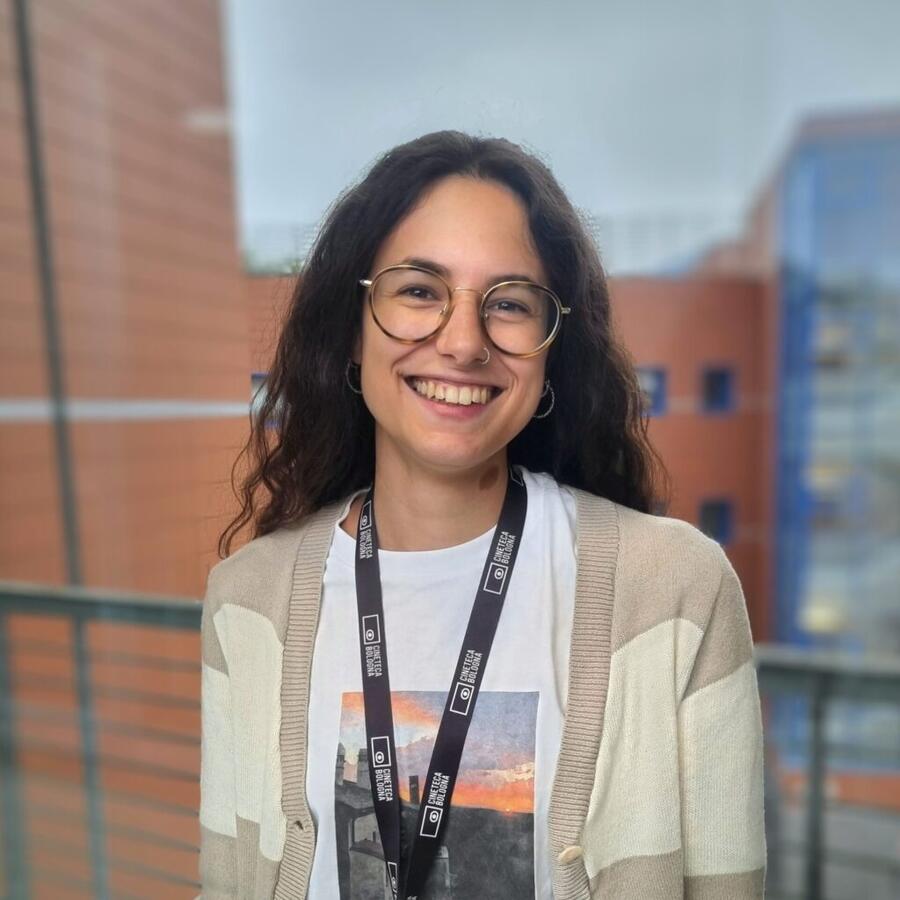
Eleonora Rossi, Council Member
Dipartimento di Chimica Industriale “Toso Montanari”
Università di Bologna
E-mail: eleonora.rossi51@unibo.it
Documenti
Notizie
Congressi

Scuole e Corsi


Premi e medaglie
Premi e medaglie
“D.H. Meadows & R.L. Feller” Medal
Through the “D.H. Meadows & R.L. Feller” Medal, the Division of Environmental and Cultural Heritage Chemistry of the Società Chimica Italiana (Italian Chemical Society) aims to confer a prestigious award on scholars who have distinguished themselves nationally and internationally through their research activities in the fields covered by the Division.
The medal will be awarded, with a reading of the official citation, during the National Congress or any other conference or event organised by the Division of Environmental and Cultural Heritage Chemistry.
Nominations must be submitted to the President of the Division of Environmental and Cultural Heritage Chemistry by three full members of the Division, within the deadline specified in the call for nominations.
Donella (“Dana”) Hager Meadows (13 March 1941 – 20 February 2001) was an environmental scientist, educator and writer. She studied chemistry, earning a B.A. from Carleton College in 1963, before obtaining a Ph.D. in Biophysics from Harvard University in 1968, demonstrating an early commitment to interdisciplinary research.
She taught at Dartmouth College in New Hampshire for 29 years, beginning in 1972. As a researcher at the Massachusetts Institute of Technology (MIT), she helped lay the foundations for the study of sustainable development through pioneering insights, most notably those presented in the Club of Rome's influential 1972 report The Limits to Growth, of which she was the lead author.
Beyond her scientific work, she sought to put the principles of sustainability into practice and promote greater public awareness of sustainable development.
An award-winning journalist and science communicator, she founded the International Network of Resource Information Centers (INRIC), bringing together analysts and activists from 50 countries committed to promoting sustainable resource management.
For 27 years, she lived on a small organic farm in New Hampshire, where she directly applied sustainable resource management practices. In 1999, she moved to Vermont, where she established an ecovillage and managed an organic farm that also became the headquarters of the Sustainability Institute, which she had founded in 1996. The Institute combined rigorous research into global systems with practical demonstrations of sustainable living.
She passed away after a short illness at the age of 59.
Robert L. Feller (1920–2018) was born in Linden, New Jersey. From an early age, he had a passion for art and frequently painted and drew. However, he pursued a scientific career because he believed he could not earn a sustainable living as an artist.
After earning his Ph.D. in Organic Physical Chemistry from Rutgers University in 1950, Feller devoted himself to research on conservation issues. He initially worked as a senior researcher at the National Gallery of Art in Washington, D.C., and subsequently became the founding director of the Research Center on the Materials of the Artist and Conservator at the Mellon Institute (now part of Carnegie Mellon University) in Pittsburgh.
During the devastating Florence flood of 1966, Feller served as a consultant, helping conservators rescue some of the world's most important Renaissance artworks.
Following his retirement in 1988, he became Director Emeritus of the Research Center.
At Carnegie Mellon's research centre, Feller studied polymers, pigments, natural organic compounds and varnishes to develop methods for preserving and restoring works of art.
He published more than 130 scientific articles and book chapters. His contributions to understanding the ageing of painting materials—including pigments, binders and varnishes—and the photochemistry of colour fading in paintings have been of fundamental importance to generations of conservation scientists.
“Mario Molina” Medal
Through the “Mario Molina” Medal, the Division of Environmental and Cultural Heritage Chemistry of the Società Chimica Italiana (hereinafter referred to as the “Division”) aims to recognise outstanding young researchers under the age of 40 who have been full members of the Division for at least two years and have already distinguished themselves through excellence in research in the field of Environmental Chemistry.
The medal is awarded during the Divisional Congress.
Mario Molina (1943–2020) earned a degree in Chemical Engineering from the Universidad Nacional Autónoma de México in 1965 and a Ph.D. in Physical Chemistry from the University of California, Berkeley, in 1972.
He was a pioneer and one of the world's leading scientists in atmospheric chemistry. Together with Frank Sherwood Rowland, he co-authored the groundbreaking 1974 paper predicting the depletion of the ozone layer as a direct consequence of emissions of certain industrial gases, particularly chlorofluorocarbons (CFCs). This research earned him the Nobel Prize in Chemistry in 1995.
His research and publications also contributed to the adoption of the United Nations Montreal Protocol, the first international treaty to effectively address a global environmental problem caused by human activity.
Between 1976 and 1986, Professor Molina and his research group published a series of papers identifying the chemical properties of compounds that play an essential role in the depletion of stratospheric ozone.
They subsequently demonstrated in the laboratory the existence of a new class of chemical reactions occurring on the surfaces of ice particles, including those found in the atmosphere. They also proposed and experimentally demonstrated a new sequence of catalytic reactions explaining much of the ozone destruction observed in the polar stratosphere.
Molina served as Institute Professor at the Massachusetts Institute of Technology (MIT) from 1989 to 2004. He also held research and teaching positions at the Universidad Nacional Autónoma de México between 1967 and 1968, the University of California, Irvine, between 1975 and 1979, and the Jet Propulsion Laboratory at the California Institute of Technology (Caltech) between 1982 and 1989.
He was a member of the US National Academy of Sciences and the Institute of Medicine. For eight years, he served as one of the 21 scientists on President Barack Obama's Council of Advisors on Science and Technology (PCAST), having previously served on the same council under President Bill Clinton.
He was also a distinguished member of several prestigious institutions, including the Pontifical Academy of Sciences at the Vatican, El Colegio Nacional in Mexico, the Mexican Academy of Sciences and the Mexican Academy of Engineering.
In recognition of his outstanding contributions to science, he received numerous honours, including more than 40 honorary degrees, the Tyler Prize for Environmental Achievement in 1983, the UNEP Sasakawa Environment Prize in 1995, the Nobel Prize in Chemistry in 1995, the Presidential Medal of Freedom and the United Nations Champions of the Earth Award.
“Raffaella Rossi Manaresi” Medal
Through the “Raffaella Rossi Manaresi” Medal, the Division of Environmental and Cultural Heritage Chemistry of the Società Chimica Italiana (hereinafter referred to as the “Division”) aims to recognise outstanding young researchers under the age of 40 who have been full members of the Division for at least two years and have already distinguished themselves through excellence in research in the field of Cultural Heritage Chemistry.
The medal is awarded during the Divisional Congress.
Raffaella Rossi Manaresi (1924–2011) graduated in Chemistry from the Faculty of Mathematical, Physical and Natural Sciences at the University of Bologna in 1948.
She began her research career in biochemistry alongside her husband, Professor Carlo Alfonso Rossi, before turning her attention to the chemistry of cultural heritage following the devastating Florence flood of 1966. She soon demonstrated tireless passion and dedication to applying chemical sciences to the conservation of works of art.
She initially worked for the Municipality of Bologna and subsequently for the Superintendency of Fine Arts of Bologna, where Superintendents Cesare Gnudi and Andrea Emiliani established the first scientific laboratory dedicated to cultural heritage conservation.
These were pioneering years, during which Raffaella Rossi Manaresi devoted her research to the conservation of stone and brick. Her commitment is reflected in the international conferences organised by the Centre for the Conservation of Outdoor Sculptures, which she tirelessly promoted and coordinated from 1969 until the late 1980s, as well as in numerous scientific papers published in Studies in Conservation.
Her pioneering research on the treatment of stone using polymeric materials included studies on the porch of Ferrara Cathedral, the façade of the Basilica of San Petronio and the relief panels by Jacopo della Quercia in Bologna, as well as the sculptures of the Baptistery of Parma.
Her technical studies on Romanesque and Gothic polychrome sculpture and on the conservation treatments of exposed brickwork were also of fundamental importance.
She later became Director of the Scientific Laboratory of the Cesare Gnudi Foundation.
Throughout her career, she established extensive international scientific collaborations and was appointed a Fellow of the International Institute for Conservation (IIC), based in London.
In 1990, she received a lifetime achievement award at the international conference Lavas and Volcanic Tuffs on Easter Island, in recognition of her outstanding contributions to the field of cultural heritage conservation.
Vincitori
Roll of Honour
Meadows & Feller Medal
- 2026 – Nadia Marchettini (University of Siena), for her significant scientific contributions to the calculation of the ecological footprint and the development of sustainability indicators. These contributions have played a fundamental role in defining metrics and measurement methodologies applicable to the sustainability of processes, products and many other human activities, fully aligned with the goals of responsible, equitable and environmentally sustainable development.
- 2025 – Costanza Miliani (ISPC-CNR), for her pioneering scientific work in the field of non-invasive diagnostics for cultural heritage, which has brought chemical sciences directly into museums and historical sites, establishing new paradigms for the interaction between science and cultural heritage. Her strategic vision, also demonstrated by her role as Director of the Institute of Heritage Science (ISPC) of the National Research Council (CNR), makes her a leading figure in the scientific community, both nationally and internationally.
- 2024 – Rocco Mazzeo (University of Bologna), for his fundamental scientific and cultural contributions at the international level in the field of diagnostics and the development of new materials for cultural heritage conservation. Professor Rocco Mazzeo has also actively promoted and strengthened collaborations between academia and institutions responsible for preserving cultural heritage.
- 2023 – Fabrizio Passarini (University of Bologna), for his extensive research in the field of Environmental and Cultural Heritage Chemistry and for developing innovative approaches to assessing the environmental impacts associated with chemical processes of industrial relevance, waste life cycles and management, and the synthesis of widely used pharmaceuticals.
- 2022 – Antonio Marcomini (Ca' Foscari University of Venice), in recognition of the breadth of his research interests in the field of Environmental and Cultural Heritage Chemistry.
Mario Molina Medal
- 2026 – Raffaele Cucciniello (University of Salerno), for his significant contribution to environmental chemistry, particularly the development of advanced catalytic processes for water treatment and the degradation of emerging contaminants, integrated with sustainable chemistry approaches.
- 2025 – Luca Carena (University of Turin), for his extensive research on chemical and photochemical processes in snow and ice, as well as abiotic photochemical processes in surface waters.
- 2024 – Luca Rivoira (University of Turin), for his significant contribution to the development of techniques for reducing the environmental impacts of priority and emerging pollutants and for their characterisation in different environmental matrices.
- 2023 – Luca Ciacci (University of Bologna), for his innovative contribution to environmental impact assessment through life cycle analysis of processes of broad relevance to environmental chemistry.
- 2022 – Daniele Cespi (University of Bologna), for his innovative contribution to the environmental impact assessment of industrial processes.
Raffaella Rossi Manaresi Medal
- 2026 – Not awarded.
- 2025 – Not awarded.
- 2024 – Giacomo Fiocco (University of Pavia), for his extensive research in the field of cultural heritage diagnostics and, in particular, for his significant contribution to the characterisation and conservation of musical heritage objects of exceptional value.
- 2023 – Enrico Greco (University of Trieste), for his contribution to advancing research in cultural heritage conservation through an innovative approach that integrates environmental issues, as well as for the international scope of his research.
- 2022 – Letizia Monico (CNR-Perugia), for her contribution to the study of the chemical reactivity of cultural heritage materials using spectroscopic techniques, with particular emphasis on inorganic pigments.