
MUSS – Museum of Historical Scientific Instruments

MUSS – Museum of Historical Scientific Instruments is an initiative promoted by the Società Chimica Italiana, conceived and coordinated by Prof. Luigi Campanella in collaboration with a group of SCI members.
The project aims to rediscover, document and preserve Italy’s heritage of historical chemical instruments. These scientific instruments, often forgotten in university laboratories, research centres or industrial facilities, represent an essential part of the country’s scientific history.
This page presents the museum items registered on the SCI website to date.

Kipp's Apparatus
First developed in 1844 by the German P.J. Kipp, this apparatus was widely used in laboratories to generate gases (such as hydrogen, carbon dioxide and hydrogen sulfide) through the reaction of an acid with a metal or a salt.
Discover moreShow less
Location: Prof. Campanella's Virtual Analytical Museum (Sapienza University of Rome)
Period: 19th century
Contact: luigi.campanella@uniroma1.it

Malligand ebulliometer
The Malligand ebulliometer is used to measure the approximate alcohol content of wine. It works by measuring the boiling temperature of a wine sample, which varies depending on atmospheric pressure and the amount of alcohol present in the sample. The first patent for this instrument dates back to 1872.
Discover moreShow less
Location: University of Salento
Period: 19th century
Contact: luigi.campanella@uniroma1.it

Two-pan analytical balance
The two-pan analytical balance is used to determine the mass of a substance sample by comparison with a certified reference mass. This type of balance was an essential instrument in chemical laboratories, allowing mass measurements with an accuracy of up to one thousandth of a gram.
Discover moreShow less
Location: Prof. Campanella's Virtual Analytical Museum (Sapienza University of Rome)
Period: 20th century
Contact: luigi.campanella@uniroma1.it

Spectroscope
The spectroscope is an instrument used to observe and analyse electromagnetic radiation emitted by a source.
Discover moreShow less
The first spectroscopes were built in Germany in 1859 by Bunsen and Kirchhoff. Before then, spectroscopic observations were carried out using simple prisms or diffraction gratings. Isaac Newton was among the first to use a glass prism in 1666 to analyse white light, splitting it into seven colours.
Location: Prof. Campanella's Virtual Analytical Museum (Sapienza University of Rome)
Period: 20th century
Contact: luigi.campanella@uniroma1.it

Deluil balance
A precision balance used for accurate mass measurements. Thanks to the use of glass bulbs fitted with stopcocks, it also allowed gases to be weighed. It was manufactured in the mid-19th century at the Deluil workshop in Paris.
Discover moreShow less
Location: University of Cagliari Chemistry Museum Collection
Period: 19th century
Contact: datzei2@gmail.com

Anemometer
An instrument used to measure the velocity of air and gas flows.
Discover moreShow less
Location: Prof. Campanella's Virtual Analytical Museum (Sapienza University of Rome)
Period: 20th century
Contact: luigi.campanella@uniroma1.it

Distillation apparatus
The distillation apparatus is used to separate the components of a liquid mixture with different volatilities through heating. The components evaporate at different boiling temperatures, and the resulting vapours are then condensed through cooling coils and collected.
Discover moreShow less
Location: Prof. Campanella's Virtual Analytical Museum (Sapienza University of Rome)
Period: 20th century
Contact: luigi.campanella@uniroma1.it

Soxhlet extractor
The Soxhlet extractor is an apparatus designed to continuously separate soluble components from insoluble ones in a solid mixture using a volatile solvent.
Discover moreShow less
The technique is based on the selective transfer of the desired components from the solid mixture into a solvent, which undergoes repeated cycles of boiling and condensation within the apparatus. This process allows the solid mixture to come into contact repeatedly with the condensed solvent. The photograph shows three complete Soxhlet extractors placed in their respective heating baths.
Location: Instruments on Display, Sapienza University of Rome
Period: 20th century
Contact: luigi.campanella@uniroma1.it

Refractometer
The refractometer is an optical measuring instrument used to determine the refractive index of a substance or a physical property directly related to its refractive index.
Discover moreShow less
Location: Prof. Campanella's Virtual Analytical Museum (Sapienza University of Rome)
Period: 20th century
Contact: luigi.campanella@uniroma1.it

Aerograph A-700
The Aerograph A-700 (often referred to as the Autoprep) represents a milestone in the evolution of analytical chemistry. Introduced in the early 1960s by Wilkens Instrument & Research (later Varian Aerograph), this instrument was not merely an analyser, but a fully equipped system for molecular separation.
Discover moreShow less
At a time when gas chromatography was still an emerging and complex technique, the A-700 stood out for making preparative gas chromatography more accessible. It was one of the first instruments designed not only to identify the components of a mixture, but also to isolate and collect them in quantities sufficient for subsequent analyses, such as infrared spectroscopy or mass spectrometry. This innovation transformed workflows in organic chemistry research laboratories.
The A-700 was renowned for its robustness and several pioneering technical features. Unlike standard analytical models, it was equipped with larger-diameter columns, allowing greater sample volumes to be injected without overloading the system.
The Autoprep system enabled repeated injection cycles and automated collection of chromatographic peaks, a major innovation that significantly increased laboratory productivity.
It typically used a thermal conductivity detector (TCD), a highly reliable and versatile detection system suitable for a wide range of chemical compounds.
Location: University of Messina
Period: 1960s
Contact: luigi.mondello@unime.it

DESAGA MinUVIS
The DESAGA MinUVIS is one of the iconic instruments manufactured by the German company C. DESAGA GmbH, based in Heidelberg and a world leader in thin-layer chromatography (TLC) instrumentation. Designed between the late 1960s and early 1970s, the MinUVIS became a gold standard for the non-destructive optical detection of organic compounds.
Discover moreShow less
At a time when the purification of chemical and pharmaceutical compounds relied heavily on chromatographic plate separation, the MinUVIS addressed the critical challenge of visualising colourless substances. Before the advent of digital technologies, this instrument served as a bridge between chemical separation and visual evidence, allowing researchers to identify molecular fractions invisible to the naked eye without chemically altering the sample.
The system was distinguished by its optical precision and robust construction, characteristic of German engineering of the period. At the heart of the device were two gas-discharge tubes emitting ultraviolet radiation at 254 nm (short-wave UV-C) and 366 nm (long-wave UV-A). This dual-wavelength capability made it possible both to exploit fluorescence quenching on plates impregnated with an F254 fluorescent indicator and to excite the intrinsic fluorescence of complex molecules.
Thanks to highly efficient selective filters, the MinUVIS provided nearly pure monochromatic emission, minimising stray visible light that could compromise the contrast of chromatographic spots.
Often used in combination with CabUVIS series dark viewing cabinets, the instrument enabled direct observation or immediate photographic documentation in an environment designed to protect the operator from UV radiation.
Location: University of Messina
Period: 1960–1970
Contact: luigi.mondello@unime.it

Micro-Column Treating Stand MCT-1A
The Micro-Column Treating Stand MCT-1A is a historical instrument manufactured by Shimadzu. The MCT-1A dates back to the golden age of capillary gas chromatography. During this period, the transition from packed columns to capillary columns, which were much narrower and more efficient, required the development of auxiliary equipment for their preparation.
Discover moreShow less
This stand was essential in research laboratories for carrying out maintenance and conditioning procedures without occupying the main gas chromatograph.
The instrument functions as a dedicated gas flow control unit for the treatment of micro-columns. Its main features include a central analogue pressure gauge and flow control valves for accurately regulating inert gases such as nitrogen or helium.
It is equipped with specific selectors for different operating procedures, including “Purge”, used to remove traces of oxygen or residual solvents; “Coat”, used to deposit the liquid stationary phase onto the inner walls of capillary columns; and “Pack Wash”, designed for washing and cleaning columns or small packed sections.
The front panel features compression fittings for quickly connecting column ends, facilitating leak testing and stability checks.
Location: University of Messina
Period: 1960–1980
Contact: luigi.mondello@unime.it

Shimadzu GC-17A
The Shimadzu GC-17A, introduced in 1992, represents a milestone in the history of analytical chemistry, marking the transition from manually controlled systems to modern electronic automation through the introduction of electronic gas flow control.
Discover moreShow less
From a chemical and technological perspective, its significance lies in the introduction of the Advanced Flow Control (AFC) system. Before this model, researchers had to manually adjust carrier gas pressure using mechanical valves. With the GC-17A, pressure and split flow could, for the first time, be electronically controlled according to the oven temperature programme.
This advancement made it possible to maintain a constant linear velocity of the carrier gas through the capillary column, optimising chromatographic resolution and ensuring unprecedented reproducibility by reducing dependence on manual adjustments by the operator.
The GC-17A was not merely a standalone instrument but also provided a platform for coupling gas chromatography with mass spectrometry, as demonstrated by systems such as the GCMS-QP5000. This development transformed gas chromatography into a highly sensitive tool for structural analysis, particularly in critical fields such as environmental monitoring and food safety.
Location: University of Messina
Period: 1992
Contact: luigi.mondello@unime.it

JONOSIS – Benchtop pH Meter (SIS, Milan).
An analogue electrochemical instrument for measuring pH, manufactured by the Italian company SIS (Dr. Ing. V. Manassi & C., Milan), probably between the 1950s and 1960s.
Discover moreShow less
It features a large central galvanometer for direct measurement of pH or electrical potential in millivolts, a temperature selector for thermal compensation, and calibration controls.
The instrument was used in chemical, university and pharmaceutical laboratories for potentiometric titrations and quality control.
Location: University of Catania – Department of Chemical Sciences
Period: 1950s–1960s

JONOSIS – Portable/Field pH Meter (SIS, Milan).
A more compact, suitcase-style version of the JONOSIS pH meter, designed for field measurements or use in laboratories with limited space.
Discover moreShow less
It retains the analogue galvanometer-based design, featuring a temperature selector, calibration controls and electrode inputs. Its electronics, based on the technology available at the time (vacuum tubes and early solid-state circuitry), provided sufficient accuracy for agricultural and environmental applications, as well as water quality monitoring.
The instrument was designed for easy transportation and operation using the local mains power supply at measurement sites.
Location: University of Catania – Department of Chemical Sciences
Period: 1950s–1960s

HALOSIS – Conductometric Salinometer (SIS, Milan)
A portable laboratory instrument for measuring the electrical conductivity of solutions, used as a salinometer to determine dissolved salt content, particularly in natural or process water.
Discover moreShow less
The analogue dial displays conductivity in µS, while the large front-panel selector allows the user to choose the measurement range. Additional controls are provided for temperature compensation and adjustment of the sample's temperature coefficient.
This model, probably dating from the 1950s–1960s, required an external conductivity cell connected via terminals labelled “Electrode/Guard”. It was used in environmental and industrial analytical chemistry.
Location: University of Catania – Department of Chemical Sciences
Period: 1950s–1960s

Carl Zeiss Jena DDR polarimeter
The Carl Zeiss Jena DDR polarimeter is a precision optical instrument used to measure the angle of optical rotation in solutions containing chiral substances, such as sugars and pharmaceutical compounds.
Discover moreShow less
This benchtop model features an integrated light source, a system of polarisers and an eyepiece with a micrometric adjustment mechanism for measuring the angle of rotation.
It was used in analytical chemistry, the sugar industry, pharmaceutical applications and university teaching during the 20th century.
Location: University of Catania – Department of Chemical Sciences

Sartorius analytical balance
A Sartorius analytical balance housed in a wooden and glass enclosure, a type of instrument widely used in European chemical laboratories from the late 19th century to the first half of the 20th century. Founded in Göttingen by Florenz Sartorius in 1870, the Sartorius company became renowned for its high-precision balances used in gravimetric analysis, pharmacy and quality control.
Discover moreShow less
The wooden structure with glass panels served a specific purpose: protecting the weighing mechanism from dust and air currents. Inside the enclosure, the central pillar, balance beam and two suspended metal pans are clearly visible, all characteristic features of highly sensitive two-pan balances. The large front-mounted knob was used to raise or lower the pans, preventing mechanical shocks and facilitating the weighing process.
This type of balance was an essential instrument in traditional chemistry laboratories, where accurate mass measurements were crucial for preparing standard solutions, performing quantitative determinations and assessing sample purity.
Unlike modern balances, it operated entirely mechanically but provided a high degree of reliability when properly adjusted and maintained.
Location: University of Catania – Department of Chemical Sciences

Bausch&Lomb Spectronic 21
Introduced in the 1970s, the Bausch & Lomb Spectronic 21 spectrophotometer represents a major milestone in the evolution of routine laboratory instrumentation. As the direct technological successor to the iconic Spectronic 20 — the world's first affordable, mass-produced spectrophotometer — the Spectronic 21 series significantly improved optical precision in both academic and industrial laboratories.
Discover moreShow less
The instrument combined solid-state electronics with a high-resolution reflection diffraction grating monochromator, providing greater stability and wavelength accuracy across the visible and near-infrared regions of the spectrum.
Renowned for its robust construction, distinctive hinged-lid sample compartment and intuitive analogue or digital readouts, the Spectronic 21 minimised operator error while maximising sample throughput.
For decades, the Spectronic 21 remained a mainstay of chemistry education and quality control, bridging the gap between manually operated optical instruments and fully automated analytical systems.
Specifications:
- Spectral bandwidth: 20 nm
- Wavelength range: 340–950 nm
Location: University of Naples Federico II – Department of Chemical Sciences
Period: 1975
Contact: daniele.naviglio@unina.it

pH Meter 4 (Radiometer Copenhagen)
The PHM4 by Radiometer Copenhagen is one of the most iconic and historically significant instruments in 20th-century analytical chemistry and medical diagnostics.
Discover moreShow less
Introduced between the late 1950s and the 1960s, it represented a major technological achievement for the Danish company, founded in 1935, which had entered the field of electrochemistry in 1937 through its collaboration with the Carlsberg laboratories.
The PHM4 was an exceptionally precise benchtop potentiometer for its time, based on vacuum-tube electronics before the widespread transition to solid-state technology.
Although originally designed for general chemical research, the PHM4 and other Radiometer instruments of the same generation established a lasting connection between the company and the history of emergency medicine.
During the devastating polio epidemic that affected Europe in the early 1950s, Professor Poul Astrup, head of the laboratory at Copenhagen's Hospital for Infectious Diseases, and anaesthesiologist Bjørn Ibsen recognised that monitoring the acid-base balance of the blood was essential to saving children suffering from respiratory failure.
Using Radiometer pH meters, they developed the renowned “Astrup Method” for measuring blood pH and the partial pressure of carbon dioxide (pCO₂).
The PHM4 became a standard instrument in research and clinical laboratories thanks to its exceptional millivolt measurement stability, helping to pave the way for modern blood gas analysis.
Location: University of Naples Federico II – Department of Chemical Sciences
Period: 1950s–1960s
Contact: daniele.naviglio@unina.it

Digital Voltmeter (Dynamco Ltd.)
The Digital Voltmeter (DVM) manufactured by Dynamco Ltd. represents a fascinating and pioneering chapter in the history of electronic metrology.
Discover moreShow less
Alongside companies such as Solartron, Fenlow and Hewlett-Packard, Dynamco was among the first to push the boundaries of digital precision at a time when electrical measurements were still dominated by differential voltmeters and analogue galvanometers.
Dynamco DVMs from the late 1960s were distinguished by highly advanced engineering solutions, essential for achieving 4- or 5-digit resolution before the advent of microprocessors and modern integrated circuits.
These instruments featured a hybrid architecture combining electrometer vacuum tubes and transistors, reflecting a remarkable period of technological transition. Their main characteristics included:
- Ultra-high input impedance.
- Solid-state logic and amplification, incorporating numerous early germanium and silicon transistors.
- Nixie tube or edge-lit displays.
Before the introduction of LED and LCD displays, Dynamco instruments used several digital display technologies:
- Nixie tubes: Cold-cathode tubes filled with neon gas, in which each digit was formed by a shaped metal cathode that glowed with a warm orange light.
- Edge-lit displays: Stacked transparent acrylic plates engraved with digits from 0 to 9, selectively illuminated by miniature incandescent bulbs positioned along their edges.
- Weston standard cell voltage reference: A highly stable reference used for accurate voltage calibration.
- Noise filtering and manual ranging: Features designed to improve measurement stability and allow the operator to select the appropriate measurement range.
Today, Dynamco digital voltmeters are valuable historical instruments, highly sought after by enthusiasts of vintage test equipment and the restoration of measuring instruments.
Build quality: Aluminium chassis, hand-tied wiring harnesses and components mounted on tag strips or gold-plated printed circuit boards reflect the exceptionally high manufacturing standards of electronic instrumentation before modern mass production.
Long-term reliability: Remarkably, provided that the electrolytic filter capacitors and rare germanium transistors have not deteriorated, or have been replaced where necessary, many of these instruments can still operate after almost 60 years, demonstrating impressive calibration accuracy and millivolt-level stability.
Location: University of Naples Federico II – Department of Chemical Sciences
Period: 1967
Contact: daniele.naviglio@unina.it

Type K-5 Universal Potentiometer (Leeds & Northrup Co.)
A precision universal potentiometer manufactured by Leeds & Northrup, a historic American manufacturer of scientific instruments. It was used for highly accurate voltage measurements, particularly in metrology and calibration applications.
Discover moreShow less
Introduced in the late 1960s, it represented the pinnacle of engineering in manual potentiometric metrology, before solid-state electronics and digital voltmeters (DVMs), such as those manufactured by Dynamco, largely replaced null-balance measuring instruments.
The Type K series served as a global standard for the precision calibration of thermocouples and voltmeters, as well as for pH and resistance measurements, for over seventy years.
Unlike earlier models, the K-5 offered three selectable measurement ranges without sacrificing resolution, providing exceptional versatility for analytical applications:
- High Range: Ideal for calibrating standard cells and voltmeters.
- Medium Range: Particularly suitable for noble-metal thermocouples and industrial sensors.
- Low Range: Designed for microvolt measurements and thermocouples with very low sensitivity.
During the 1970s and 1980s, the K-5 played a central role in physical chemistry laboratories, enabling accurate investigations of the thermodynamic constants of galvanic cells. It was also widely used in metrology departments to verify the linearity of early chart-recording potentiometers and analogue-to-digital (A/D) converters.
Location: University of Naples Federico II – Department of Chemical Sciences
Period: 1960
Contact: daniele.naviglio@unina.it

Precision Analytical Balance (A. Rueprecht & Sohn)
The Precision Analytical Balance manufactured by Albert Rueprecht & Sohn in Vienna is an outstanding masterpiece of precision mechanics and metrology from the 19th and early 20th centuries.
Discover moreShow less
Albert Rueprecht, who founded the company in 1858, and his son were official suppliers to the Imperial Weights and Measures Office in Vienna (Anstalt für Maass und Gewicht), the University of Vienna and some of the most prestigious scientific institutions of the Austro-Hungarian Empire and Europe. Their balances were renowned for their exceptional sensitivity, pushing the boundaries of gravimetric measurement long before the advent of electronics.
This instrument belongs to the golden age of equal-arm analytical balances, designed as true monuments to precision. They were housed in elegant cabinets made of fine wood, usually mahogany or walnut, with three or four glass doors to completely isolate the weighing mechanism from laboratory air currents and the operator's body heat.
The secret behind the extraordinary sensitivity of Rueprecht balances lay in the precision engineering of their knife-edge pivots. The balance beam, often cast in bronze or special low-thermal-expansion alloys and finely perforated to reduce its mass without compromising rigidity, oscillated on three knife edges made of agate or extremely hard, mirror-polished flint:
1. A central downward-facing knife edge resting on an agate bearing surface attached to the central supporting pillar.
2. Two upward-facing knife edges at the ends of the beam, supporting the suspension assemblies and their respective weighing pans.
Rueprecht analytical models, often identified in historical catalogues by Roman numerals or letters, such as the Costante I, featured sophisticated externally operated mechanical control systems.
To prevent the knife edges from wearing down or chipping due to shocks during the loading and unloading of weights, the balance was equipped with an arrestment mechanism operated by a large knurled knob located at the base of the enclosure.
A graduated scale, usually ranging from 1 to 10 or from −5 to +5, was engraved along the upper part of the balance beam. Using an external metal rod that could be operated without opening the cabinet, the chemist could move a small hook and place a tiny U-shaped platinum or aluminium wire, known as a rider and usually weighing exactly 1 mg or 10 mg, into different notches along the beam.
This mechanism made it possible to determine fractions of a milligram without opening the enclosure or handling extremely small weights with tweezers.
Location: University of Naples Federico II – Department of Chemical Sciences
Period: Late 19th – early 20th century
Contact: daniele.naviglio@unina.it

Mini-Monitor G-M Meter
The Mini-Monitor G-M Meter (Mini-Instruments) represents a benchmark in British radiation protection and laboratory contamination monitoring.
Discover moreShow less
Originally designed and manufactured in the United Kingdom by Mini-Instruments Ltd., a company founded in Burnham-on-Crouch and later acquired by Thermo Scientific / Thermo Electron, this instrument became widely recognised during the 1970s and 1980s for its distinctive industrial design, robust construction and characteristic logarithmic analogue scale.
The Mini-Monitor was developed with a specific purpose: to provide a radiation monitoring instrument that could function both as a reliable benchtop device and as a lightweight portable unit (approximately 1 kg). It could easily be transported between laboratories to check surface contamination, assess radiation shielding or monitor the decay of radioactive tracers commonly used in biochemical research during the 20th century, such as ¹⁴C, ³²P, ³⁵S and ¹²⁵I.
Its design was simple yet highly functional: a die-cast aluminium housing with a powder-coated finish, often in a distinctive blue-grey or olive-green colour depending on the production period. A large handle on top also served as an inclined support when the instrument was placed on a laboratory bench. The upper section of the housing featured a specially shaped holder to secure the probe when not in use.
One of the features most appreciated by health physicists and chemists was its analogue needle indicator with a logarithmic scale.
At the heart of the instrument was a Geiger–Müller tube, internally quenched using halogen vapours (halogen-quenched) to extend its operating life and prevent spurious discharges.
The monitor also incorporated a built-in speaker that converted each detected pulse, corresponding to an ionisation event inside the G-M tube, into the characteristic audible “click”. The frequency of these clicks provided the operator with an immediate indication of radiation intensity without having to look at the instrument.
It also featured a potentiometer for setting an adjustable visual and audible alarm threshold (“Trip”) across the measurement scale.
Today, Mini-Instruments Mini-Monitors are regarded as exceptionally durable workhorses of radiation protection. Many units manufactured more than forty years ago remain operational in teaching and historical laboratories, requiring relatively little maintenance beyond periodic checks of measurement linearity and careful handling to avoid damaging the probe's extremely delicate window.
Location: University of Naples Federico II – Department of Chemical Sciences
Period: 1970s–1980s
Contact: daniele.naviglio@unina.it

Mirror Galvanometer (Cambridge Instrument Co. Ltd.)
The mirror galvanometer (Cambridge Instrument Co. Ltd.) was used as a null indicator in conjunction with manual potentiometers and measuring bridges.
Discover moreShow less
The instrument's design was remarkably elegant in its mechanical simplicity.
Behind the glass window was a moving coil suspended by a thin, tensioned wire. A tiny circular mirror was attached to the centre of the coil.
An external beam of light, directed through the window onto the small internal mirror, was reflected onto a distant graduated scale, usually a separate translucent ruler.
When an extremely weak electric current passed through the coil, it rotated slightly. This movement caused the mirror to deflect, shifting the light spot along the scale.
This system provided optical amplification of even the smallest electrical currents without the need for additional mechanical components or weights.
Location: University of Naples Federico II – Department of Chemical Sciences
Period: 1935–1955
Contact: daniele.naviglio@unina.it

Dr. Lange Filter Colorimeter
The Dr. Lange filter colorimeter, manufactured during the 1950s and 1960s, is a photoelectric instrument designed for the quantitative determination of substances in solution through absorbance and transmittance measurements. It represents one of the early examples of automated optical instruments used in analytical chemistry, clinical and industrial laboratories, and was a precursor to modern spectrophotometers.
Discover moreShow less
Its operating principle is based on the Beer–Lambert law, according to which the absorbance of a solution is proportional to the concentration of the absorbing species and the optical path length travelled by light. A light source emits a beam that passes through selected optical filters, which isolate a specific region of the spectrum. The light then passes through the cuvette containing the sample and reaches a photoelectric cell, which converts the transmitted light intensity into a proportional electrical signal.
The instrument consists of a central unit with two sample compartments housing glass cuvettes, a robust metal structure, an analogue galvanometer positioned on top, and adjustment knobs for filter selection and zero calibration.
The two solutions are placed in the glass cuvettes, and the lamp located at the rear of the instrument is switched on. The ammeter is set to zero, and a constant current is supplied. By changing the appropriate filters, the operator can read the corresponding current intensity for each filter. The lower scale displays values as percentages from 0 to 100 (“Prozentuale Absorption”), while the upper scale ranges from 0 to 2 milliamperes (“Extinktion”). Thanks to its interchangeable filters, the colorimeter can be adapted to different colorimetric analyses.
This type of instrument was widely used for the quantitative determination of metal ions, sugars, proteins and numerous coloured compounds, finding applications in chemical, pharmaceutical and biological laboratories.
Although gradually replaced by modern spectrophotometers, the Dr. Lange filter colorimeter represents an important milestone in the evolution of analytical techniques based on the interaction between electromagnetic radiation and matter.
Location: Department of Chemistry, University of Bari
Period: 1950–1960
Contact: cosimadamiana.calvano@uniba.it

Pulfrich Immersion Refractometer
The Pulfrich immersion refractometer, developed by German physicist Carl Pulfrich in the late 19th century, is a high-precision optical instrument used to determine the refractive index of liquids and transparent substances. The instrument shown is one of the classic models used in chemistry and physics laboratories for accurate measurements, with a refractive index range of 1.3524 to 1.6470.
Discover moreShow less
Its operating principle is based on the refraction of light and the determination of the critical angle for total internal reflection. The sample to be analysed is placed in contact with a glass prism with a high refractive index. By observing through the telescope and carefully adjusting the optical system, the operator can accurately identify the boundary between the illuminated and dark regions, determining the critical angle at which the light ray emerges, corresponding to the dividing line between the two regions. This measurement is then used to calculate the refractive index of the substance being examined.
The instrument consists of a robust metal base, a circular graduated goniometric system, an angled observation telescope and a prism immersed in the sample. Micrometric adjustment screws and graduated scales allow extremely fine adjustments and highly accurate readings. To ensure measurement precision, the prism was often maintained at a constant temperature, as the refractive index is highly sensitive to temperature variations.
The Pulfrich refractometer was used to identify pure substances, determine solution concentrations and investigate the optical properties of materials. Although largely replaced by modern digital refractometers, it remains a historically significant scientific instrument that made an important contribution to the development of optical analytical techniques and experimental physical chemistry.
Location: Department of Chemistry, University of Bari
Period: Late 19th century
Contact: cosimadamiana.calvano@uniba.it

Abbe Prism Refractometer
The Abbe prism refractometer, developed in the late 19th century by German physicist Ernst Abbe, is an optical instrument used to determine the refractive index of liquids and transparent materials. The instrument shown, dating from the 1950s, is one of the classic models used in chemistry, physics and quality control laboratories.
Discover moreShow less
Its operating principle is based on the refraction of light, the change in direction that occurs when a light ray passes between two media with different refractive indices. The sample to be analysed is placed between two high-quality optical prisms. By observing through a telescopic system and carefully adjusting the instrument, the operator can identify the boundary between the illuminated and dark regions and accurately determine the refractive index.
The instrument consists of a prism system, an observation telescope and adjustment mechanisms that allow precise measurements. Measurements are generally referenced to the sodium D line (589 nm) at a standard temperature of 20 °C, maintained by a temperature-control system incorporated into many models.
The Abbe refractometer has been widely used to identify pure substances, determine the concentration of solutions and assess the quality of food, pharmaceutical and chemical products.
Although more advanced automated digital instruments are available today, the Abbe prism refractometer remains an important historical example of the evolution of optical analytical techniques and continues to be used in teaching and laboratory applications.
Location: Department of Chemistry, University of Bari
Period: 1950
Contact: cosimadamiana.calvano@uniba.it

Portable potentiometer
The portable potentiometer, dating from the 1960s, is a high-precision electrochemical instrument used to measure small electrical potential differences, generally ranging from 0 to 50 mV.
Discover moreShow less
This type of instrument was widely used in analytical chemistry laboratories to determine the potential generated by electrochemical cells, glass electrodes for pH measurement and thermocouples, without drawing current from the circuit and therefore without altering the system under examination.
The instrument is housed in a sturdy wooden case designed to facilitate transportation and provide protection. The front panel features an analogue galvanometer used as a null indicator, a large graduated knob for fine voltage adjustment, and several terminals and selectors for connecting measurement sources. The graduated millivolt scale allows highly accurate readings, while the built-in power supply provides the stable reference voltage required for the potentiometric system to operate.
Its operating principle is based on the null-balance method: the unknown voltage is compared with a known, adjustable voltage until equilibrium is reached, as indicated by the galvanometer showing zero current. Under these conditions, the potential difference being measured corresponds to the value set on the instrument, ensuring an extremely accurate measurement.
Thanks to its high sensitivity and reliability, the portable potentiometer was an essential instrument for numerous laboratory applications, representing an important step in the development of modern electroanalytical techniques and today's digital instruments for measuring electrical potential and pH.
Location: Department of Chemistry, University of Bari
Period: 1960
Contact: cosimadamiana.calvano@uniba.it

W.T.W. Conductivity Meter
The W.T.W. conductivity meter is a laboratory instrument designed to measure the electrical conductivity of liquid solutions, a parameter that reflects a solution's ability to conduct electric current due to the presence of dissolved ions. Conductivity is a fundamental property in analytical chemistry, with applications in water quality monitoring, conductometric titrations and the study of electrolyte properties.
Discover moreShow less
Manufactured by the German company W.T.W. (Wissenschaftlich-Technische Werkstätten), the instrument features the robust construction typical of mid-20th-century analogue laboratory equipment.
The central section is dominated by a large circular graduated dial, which allows measurements to be read using an analogue pointer. The front panel features several controls for adjusting sensitivity, selecting the measurement range and choosing the operating frequency, generally 50 Hz or 3 kHz. The use of alternating current helps prevent electrode polarisation in the conductivity cell.
The instrument is equipped with dedicated terminals for connecting a measuring cell immersed in the solution being analysed. Appropriate selectors allow different measurement ranges to be chosen, making the device suitable for both highly diluted solutions and samples with high ionic concentrations.
In addition, the presence of the so-called “magic eye”, an electronic indicator commonly used in instruments of that period, helped improve measurement precision.
Although more advanced digital conductivity meters are available today, this instrument remains an important historical example of the evolution of electrochemical analytical techniques.
Location: Department of Chemistry, University of Bari
Period: 1950
Contact: cosimadamiana.calvano@uniba.it

Officine Galileo V7K vacuum gauge
The Officine Galileo V7K vacuum gauge is an instrument designed to measure low pressures and the degree of vacuum within closed systems.
Discover moreShow less
Manufactured by the historic Italian company Officine Galileo, this device was widely used in chemistry and physics laboratories, as well as in industrial facilities where accurate control of vacuum conditions was essential. Measurements were generally expressed in Torr, a unit traditionally used to indicate pressure in low-pressure systems.
Its operating principle is based on the physical properties of rarefied gases. The sensor, enclosed in the transparent glass upper section, is connected through a side fitting to the vessel or system whose pressure is to be measured. Changes in vacuum conditions cause variations in the behaviour of the measuring system, which are displayed on an internal graduated scale. The glass enclosure allows direct observation of the sensitive components while protecting them from the external environment.
The instrument consists of a robust metal base, a lateral adjustment mechanism and an upper glass housing containing the measuring device and graduated scale. Its particular configuration ensures good measurement accuracy and a rapid response to pressure variations. The V7K model was particularly suitable for measuring medium and high vacuum levels, making it essential for numerous experimental applications.
Vacuum gauges of this type were used in vacuum distillation systems, evaporation lines, facilities for manufacturing lamps and electronic tubes, and scientific equipment.
Although gradually replaced by more modern electronic vacuum gauges, they represent a significant milestone in the development of vacuum measurement techniques and 20th-century scientific instrumentation.
Location: Department of Chemistry, University of Bari
Period: 1950
Contact: cosimadamiana.calvano@uniba.it
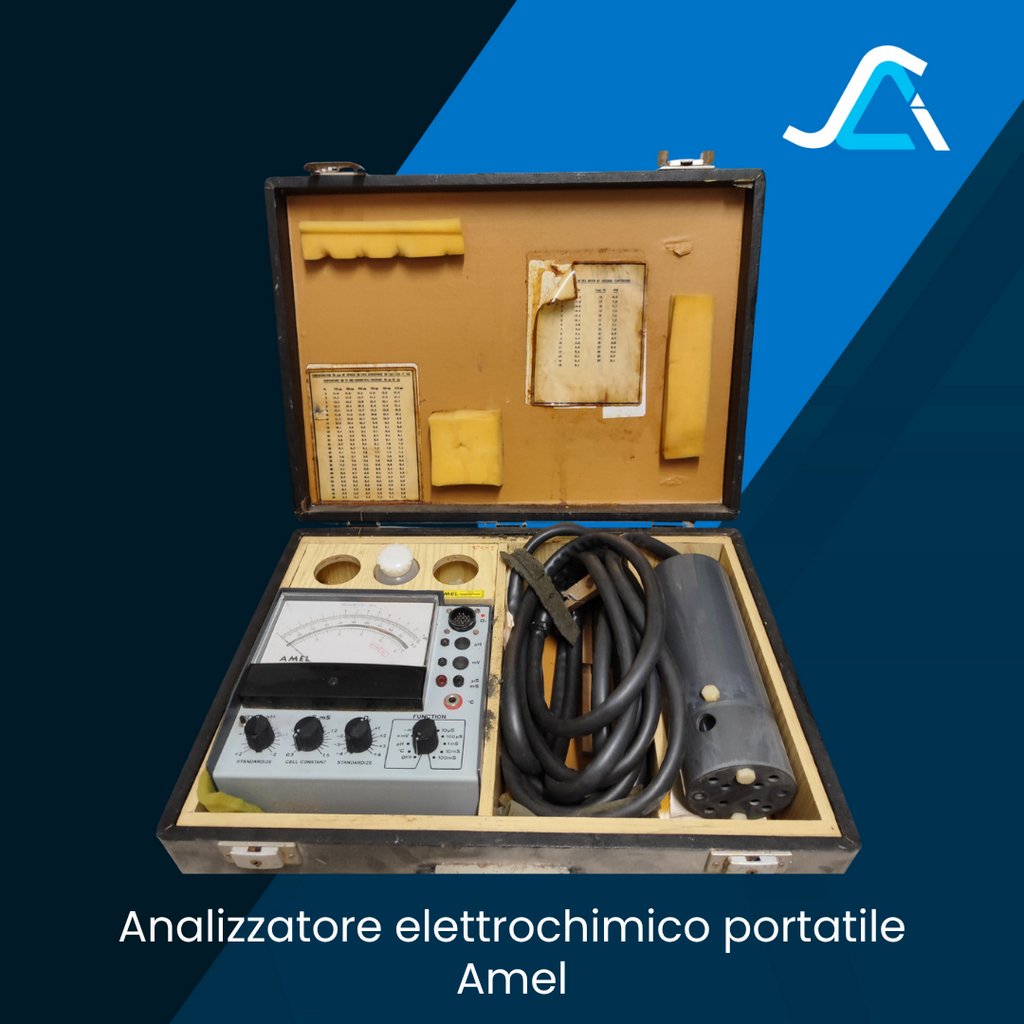
Portable Electrochemical Analyser AMEL
The portable electrochemical analyser is a multifunctional field instrument dating from the 1970s or 1980s, designed to measure the main physicochemical parameters of water and liquid solutions directly at the sampling site.
Discover moreShow less
Its most prominent feature is the large central analogue moving-coil display, bearing the AMEL brand, used to read measured values. The dial features the main measurement scales: pH, ranging from 0 to 14; redox potential, expressed in millivolts (mV); and electrical conductivity, indicated in millisiemens and microsiemens (mS/µS).
On the right-hand side of the panel is the function selector, which allows the operator to choose the instrument's operating mode. This control enables pH measurements, positive and negative potential measurements in millivolts, temperature measurements in degrees Celsius, and conductivity measurements across different ranges, selectable from 10 µS, 100 µS, 1 mS, 10 mS and 100 mS.
Next to the instrument is a robust external multiparameter probe, consisting of a dark grey cylindrical body connected by a braided cable. This immersion measuring cell incorporates the electrodes required for direct field measurement of the analytical parameters.
The adjustment and calibration controls are located on the left-hand side of the panel and are essential for ensuring measurement accuracy. These include the “Cell Constant” control and the “Standardize” adjustment, both used during calibration procedures.
The entire system is housed in a sturdy wooden and metal carrying case with a protective interior lining, typical of portable scientific instrumentation of the period. Paper calibration and conversion tables are also attached beneath the lid, reflecting the instrument's professional applications and the operating procedures used before modern digital systems became widespread.
Location: Department of Chemical, Biological, Pharmaceutical and Environmental Sciences, University of Messina
Period: 1970–1980
Contact: davide.barreca@unime.it
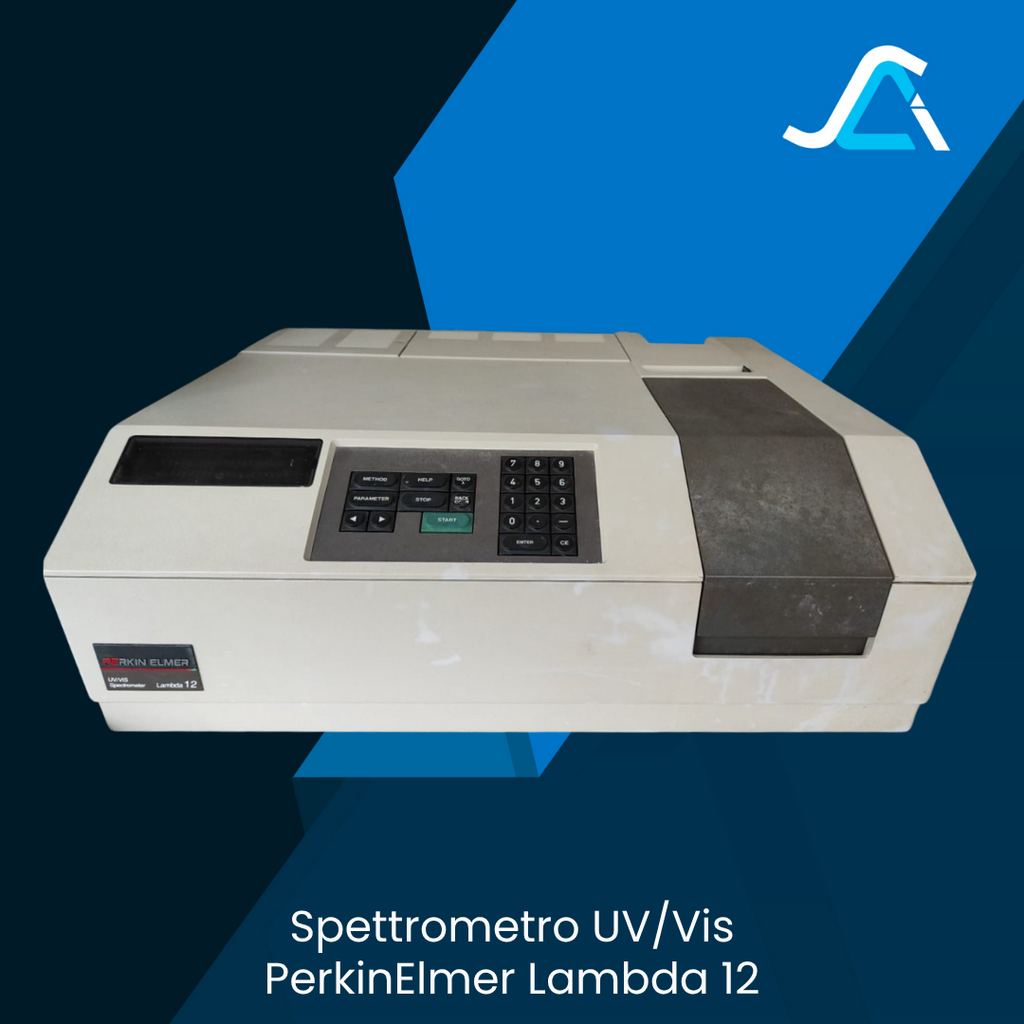
PerkinElmer Lambda 12 UV/Vis spectrophotometer
The PerkinElmer Lambda 12 UV/Vis spectrophotometer is a double-beam optical system designed for routine quantitative and qualitative analyses in chemical, biological and pharmaceutical laboratories. Its configuration ensures reliable and reproducible measurements, making it particularly suitable for applications requiring high accuracy and long-term stability.
Discover moreShow less
The Lambda 12 operates over a broad wavelength range from 190 to 1100 nm, allowing analyses in both the ultraviolet (UV) and visible (Vis) regions of the spectrum. Its double-beam optics are among the instrument's main strengths, enabling automatic reference compensation, effective baseline correction and excellent measurement stability during extended analyses.
To generate light radiation, the system uses two pre-aligned lamps: a deuterium lamp for the UV region and a tungsten-halogen lamp for the visible region. This configuration ensures optimal performance across the entire operating spectral range.
The instrument is also capable of rapid scanning, reaching a maximum speed of 2880 nm/min, significantly reducing data acquisition times.
The front panel features a membrane keypad with an integrated numerical display and dedicated function keys, including METHOD, PARAMETER, START and STOP, allowing users to set and manage analytical parameters directly.
The sample compartment is located on the right-hand side of the instrument and is accessible through a dark grey sliding cover. It accommodates both the sample cuvette and the blank or reference cuvette.
The Lambda 12 can operate either as a standalone instrument or connected to a computer via an RS232 serial interface. In the latter configuration, dedicated software such as UV WinLab enables advanced instrument control and data processing, extending the range of functions available to the user.
Location: Department of Chemical, Biological, Pharmaceutical and Environmental Sciences, University of Messina
Contact: davide.barreca@unime.it
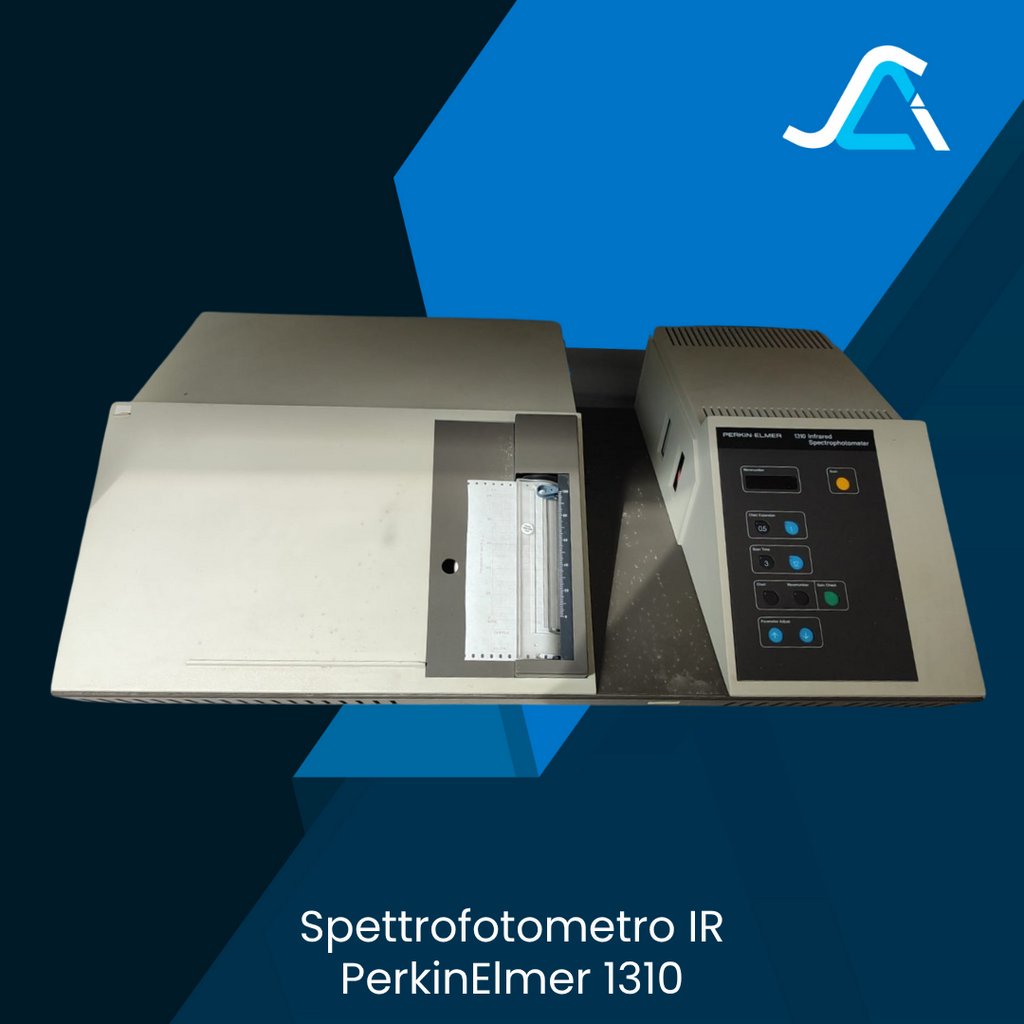
PerkinElmer 1310 IR spectrophotometer
The PerkinElmer 1310 infrared spectrophotometer was used for spectroscopic analysis and the identification of chemical compounds by recording their infrared absorption spectra. It is a double-beam instrument with automatic recording, a configuration that allows the sample signal to be compared simultaneously with a reference signal, improving measurement accuracy.
Discover moreShow less
The instrument generally operates over a wavenumber range of 4000 to 600 cm⁻¹, covering much of the mid-infrared region, which is particularly useful for identifying functional groups in molecules.
At the centre of the instrument is an integrated chart recorder that automatically traced the absorption spectrum onto graph paper using a pen, providing an immediate visual representation of the acquired data.
On the right-hand side is the control panel, equipped with a soft-touch membrane keypad through which the operator could set various acquisition parameters, including chart expansion, scanning time and wavenumber adjustments.
These features made the PerkinElmer 1310 a particularly versatile and reliable instrument for laboratory spectroscopic analysis.
Location: Department of Chemical, Biological, Pharmaceutical and Environmental Sciences, University of Messina
Period: 1970
Contact: davide.barreca@unime.it